


Preventing pet theft: Simple precautions pet lovers can take
Updated February 2026 | Pet Sitters International

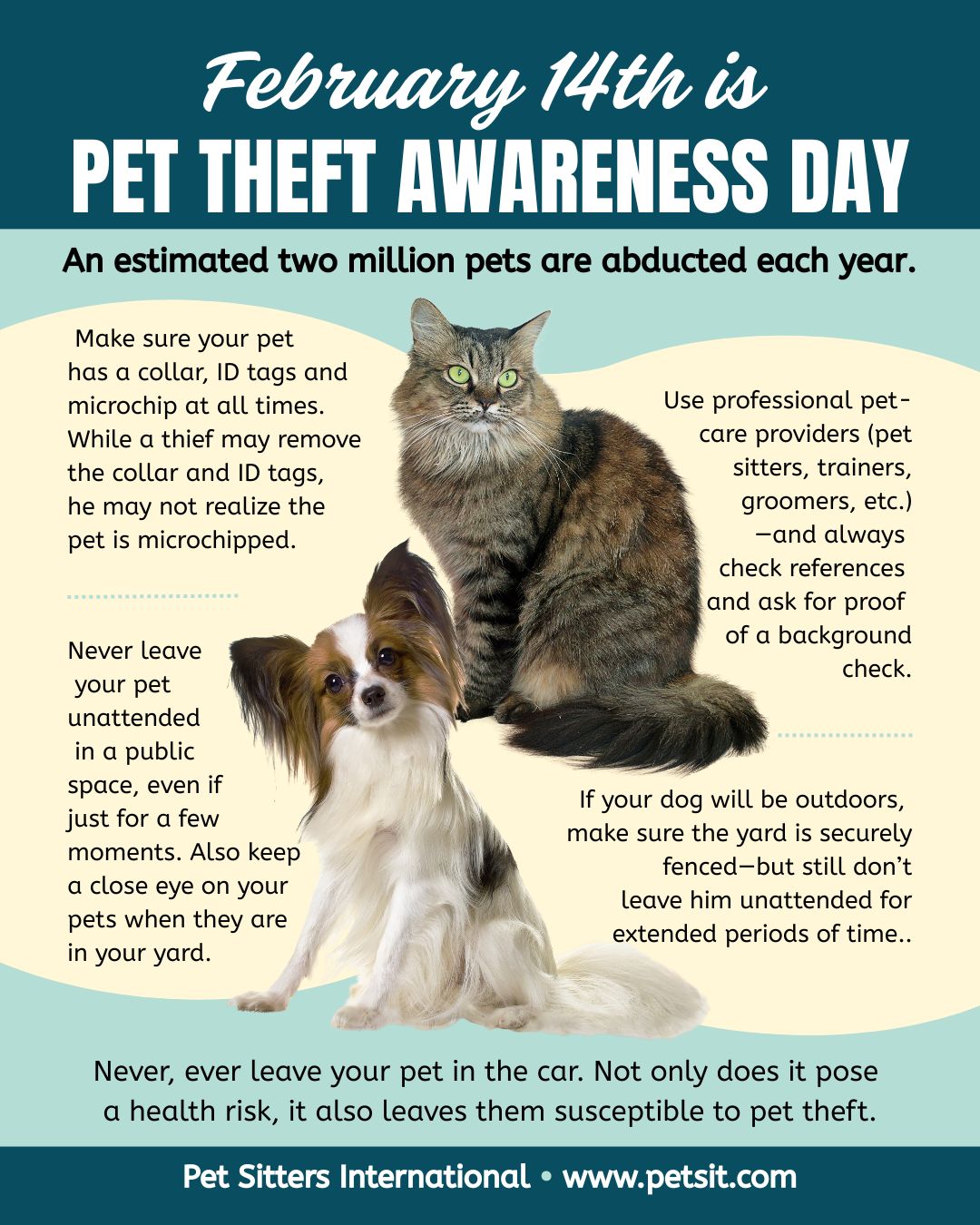
February 14th is known for love, flowers, and valentines, but it’s also Pet Theft Awareness Day. This observance is a reminder that protecting the pets we love requires awareness and prevention.
It may be hard to imagine why someone would steal a pet, but pet theft is a real and ongoing issue. In many cases, pets are taken for resale, breeding, fighting, or even just because they are friendly and easy to approach.
The good news? There are simple, proactive steps pet parents and professional pet sitters can take every day to reduce the risk.
1. Never leave pets unattended in public or in vehicles.
Many stolen dogs are taken from public places when left briefly unattended. Friendly, approachable dogs are especially vulnerable because they may be more easily lured away.
Pet parents and pet-care pros should:
- Keep pets leashed and within reach at parks and public spaces
- Never tie a dog outside a store “just for a minute”
- At home, avoid leaving dogs unattended in front yards, even with fencing
Also, never leave pets in vehicles! This creates both a theft opportunity and health risk, even if you plan to only be away for a few minutes.
2. Do your homework when hiring pet-care providers.
Unfortunately, there are documented cases of individuals posing as pet sitters or dog walkers to gain access to pets. Just because someone has a profile on a pet-sitting app doesn’t mean they are a qualified pet sitter running a professional business.
Pet parents should:
- Ask for references
- Confirm proof of insurance and background checks
- Use trained professionals operating legitimate businesses
Pet parents can download PSI’s free Pet Sitter Interview Checklist and search for professional pet sitters and dog walkers at petsit.com/locate.
Hiring a professional pet sitter not only keeps pets safe at home. It also reduces exposure to theft risks in unfamiliar environments.
3. ID tags are good, but microchips are better.
Collars and ID tags are essential, but they can be removed. A thief may remove a collar, but they are unlikely to scan for a microchip. If the pet is taken to a vet or shelter, the chip can reveal the pet’s true home.
According to the American Veterinary Medical Association:
- An estimated 10 million dogs and cats are lost or stolen in the United States alone every year.
- Research indicated only 22 percent of lost dogs entering shelters were returned to their families, but that percentage rose to more than 52 percent when a dog was microchipped.
- One in 50 cats in animal shelters was returned to their owners, but when microchipped, nearly two out of five cats were reunited with their families.
4. Keep clear ownership records and recent photos
Proper documentation can be vital if your pet is taken.
Pet parents should have:
- Recent photos of you with your pet
- Veterinary records
- Adoption or purchase paperwork
These documents can be critical if someone falsely claims ownership, including former roommates, partners, or acquaintances.
5. Don't overshare on social media.
We all love to show off photos of our pets, so this may be a risk that many pet parents don’t consider. Pet sitters and dog walkers should also be cautious, only sharing pet photos or videos with clients’ permission and ensuring photos/videos don’t contain identifying information.
Avoid posting:
- A pet’s location in real time
- Photos that show home address, street signs, or routine walking routes
- “For sale” value signals (rare breed, expensive puppy, etc.)
The American Kennel Club (AKC) reports that purebred and small dogs are increasingly targeted for online sales and puppy scams.
6. Know what to do if a pet is stolen.
If your pet (or a client’s pet) is taken, time matters!
If you suspect your pet has been stolen:
- File a police report right away.
- Notify your local animal control office.
- Contact local shelters, pet-rescue groups and veterinarians.
- Report the pet as stolen to Pet FBI.
- Alert neighbors and local pet groups.
- Monitor online marketplaces where pets may be resold.
If you are a pet sitter or dog walker and a pet in your care is stolen, you will also want to notify your client immediately.
Awareness Is the Best Prevention
Pet theft is upsetting to think about, but awareness and simple daily precautions dramatically reduce the risk.
Whether you’re a pet parent or a professional pet sitter or dog walker, these steps help ensure that the pets in your care stay exactly where they belong: safe at home.
Original article published February 2019.


Comments
Rifat
I think dogs treat us like friends and guard us. If you buy a dog and bring it home, if you want to be like a friend with him, you have to give him good service and give him good food and take him for a walk, then slowly he will behave like a friend and guard us. If you any kind of Information go to: itinstitute.com
Deborah
Emilia
Lynn Hall